
Modern radio operators connect you to maritime media
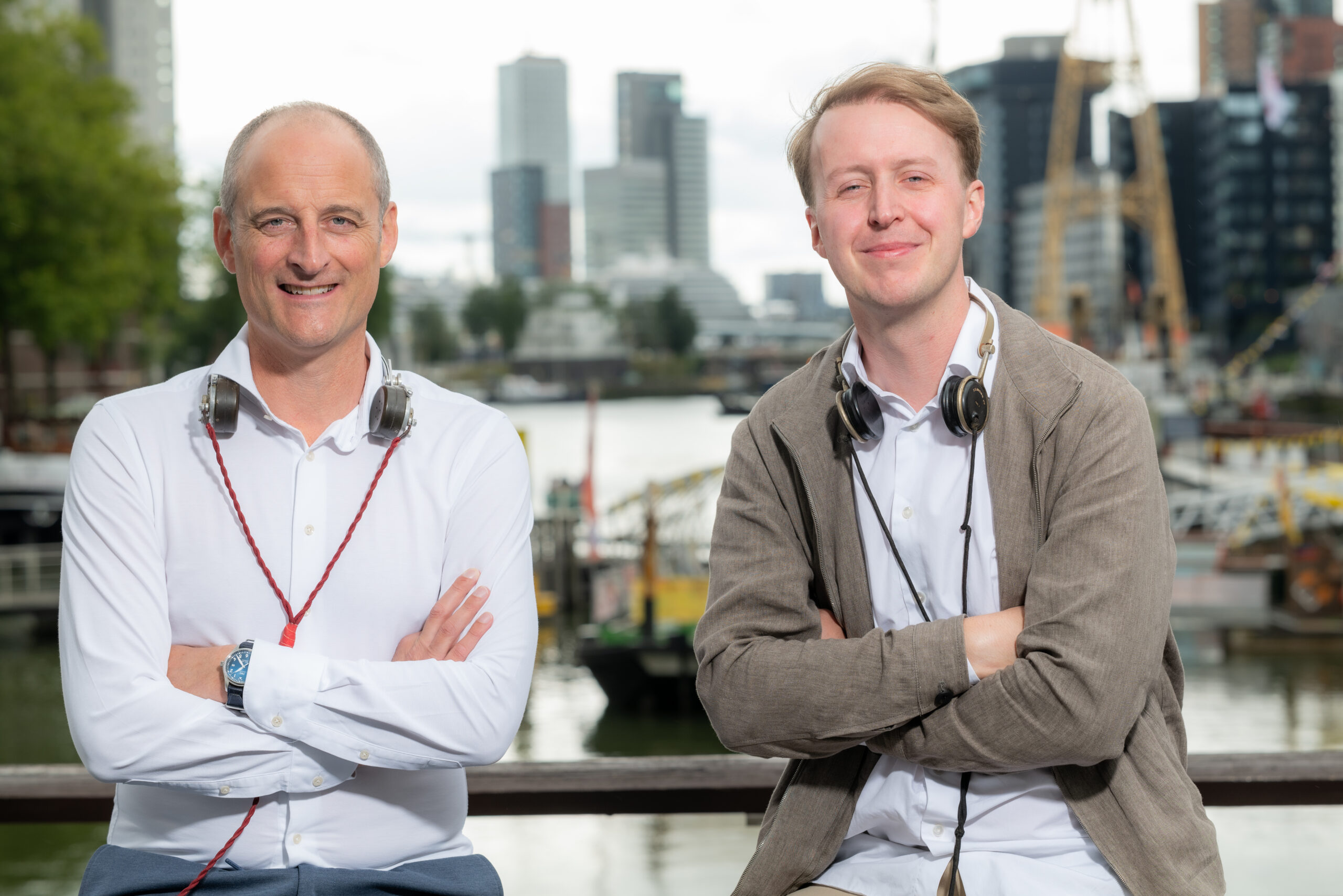
Once, the radio operator was responsible for keeping a ship in contact with the shore via radiotelegraphy. Communication has since changed beyond recognition, yet for maritime businesses, one challenge remains unchanged: how do you make sure your story reaches the right people?
For Frans Swarttouw, co-owner and founder of Marconic, his fascination with the maritime world began while working for an oil company.<
“One day, the owner told me I should go and have a look at our terminal in the Port of Rotterdam. I saw those seagoing vessels there and thought: ‘Holy moly, this is beautiful!’ It was good old-fashioned love at first sight. That fascination was also what led us to launch our maritime marketing agency, Getting the Market, in 2011.”
There, Swarttouw saw just how much knowledge remains hidden within maritime companies.
“Companies are primarily occupied with their day-to-day operations. What they themselves might view as ‘business as usual’ often involves a tremendous amount of craftsmanship and compelling stories. We make sure that these newsworthy stories are brought to light. Through our second company, Marconic, we distribute press releases to maritime media worldwide. How brilliant is it that we can give a Lebanese shipping company visibility from Chile to Japan? And the beauty of it is that clients can track all the coverage in real time via a dashboard.”
Visibility in the age of AI
Meanwhile, co-owner Laurens Moerland notes that attitudes towards marketing are changing.
“Years ago, maritime companies still suffered from cold feet. Why should we market ourselves? Why do we need to be visible? Today, they recognise the necessity much more clearly. International competition is forcing them to do so. This sector is a niche, but a gigantic one, comprising all sorts of different segments. If a company wants to raise its profile around digitalisation in the Asia-Pacific region, for example, it needs to know exactly where to pitch such a story. We know the specialist media and also have relationships with journalists at major publications.”
AI is playing an increasingly important role in this. Moerland: “Companies still rely heavily on gut feeling, saying, for instance: this is how I want to be found. But is that really the right approach? We are witnessing a massive shift from traditional search engines to AI tools. To ensure visibility in the age of AI models as well, ‘third-party mentions’ in the trade press and on maritime websites are becoming increasingly important. With Marconic, we help companies become visible in exactly those places.”
Hidden gold
Technology and data form only part of the solution here. “In that respect, we go further than a traditional PR agency,” says Moerland.
“We also employ maritime media specialists who help companies unearth newsworthy topics. There is an incredible amount of hidden gold within organisations. We help to extract that gold.”
According to Swarttouw, the name Marconic fits this idea perfectly “In the past, you had the radio operator on board, who connected the ship to the shore by radiotelegraphy. We view ourselves as modern radio operators. We connect companies with maritime media worldwide.”
The article first appeared in Het Financieele Dagblad’s (FD) Maritime & Offshore edition on 5 October 2026.

Let’s continue the conversation

Frans Swarttouw
frans@marconic.com
I believe maritime companies have a much bigger opportunity to strengthen their digital visibility than many realise today.
With Marconic, we help shipping companies, maritime suppliers and offshore businesses distribute press releases into the right maritime media ecosystem while building long-term digital authority and discoverability.
Curious how that works in practice?
Feel free to reach out.
